BOBLME-2009-REG-5.0-IWS-09
Marine & Coastal Fisheries Resources, Activities and
Development
in Bangladesh: Relevance to BOBLME Project
M.G. Hussain, M. Enamul Hoq, M. Emran and
M. Asaduzaman
Introduction
Bangladesh having the 3rd largest aquatic biodiversity in
Asia behind China & India
About 800 species of fresh, brackish & marine waters
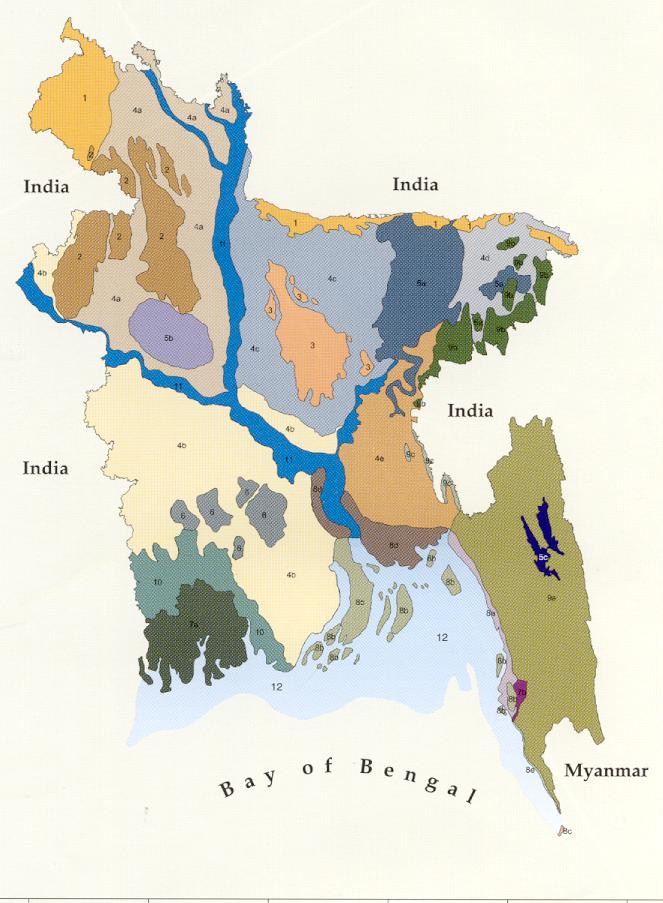
Having world's largest flooded wetland (Bengal Delta) &
three main river systems
Ganges, Brahmaputra & Megna
Vast water resources offer the best possibilities for food
security & income generation
In inland fisheries, Bangladesh's position is 2nd among
the top ten fish producing countries of the world (FAO
2009)
Among the top ten aquaculture producing countries
Bangladesh's position is sixth (FAO 2009).
The country has about 710 km long coastal belt
Continental shelf is about 37,000 km2 having up
to 50 m depth
Area of EEZ is about 1,64,000 km2, which is
larger than land area (1,44,000 km2) of the
country
Fisheries sector contributes 5.71% of total
export earning and 4.92% to the GDP
The sector contributes 22% of the total
agricultural production & 63% of the total
animal protein intake of the country
Country Production in Brief
Present fish production (2007): 2.56 million tons
Total Marine catch : 497,573 t (19.4%)
Industrial : 34156 t (1.3%)
Artisanal : 463414 t (18.1%)
Total Inland catch : 2,065,723 t (80.59%)
Capture : 1060181 t (41.36%)
Aquaculture : 1005542 t (39.23%)
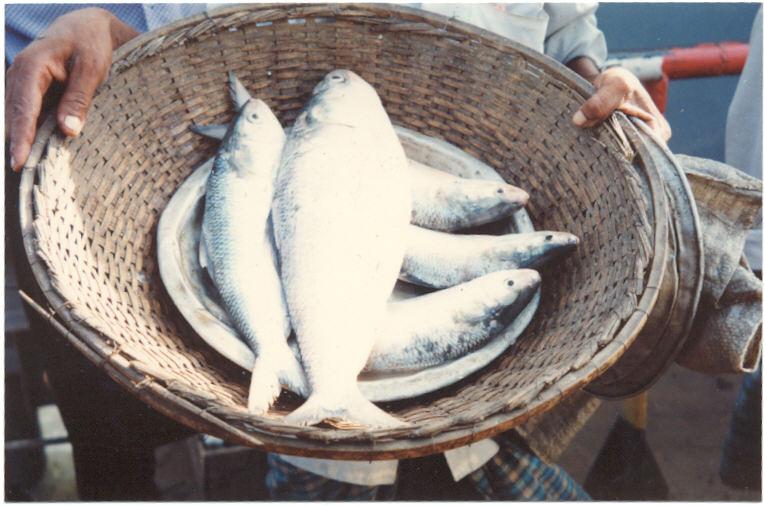
Hilsa (Tenualosa ilisha), as a single species, accounts nearly half of the total
marine catches, and 12-13% of the total fish production of the country.
Inter-ministerial cooperation succeed in implementation of the HMAP
Juvenile hilsa abundance recorded 35% more than previous years
Over all hilsa production increased 40% more than previous years
Govt. allocated more money (US$ 0.29 million) for alternate livelihood
i.e. cage culture and other activities of hilsa fishers during fishing ban period
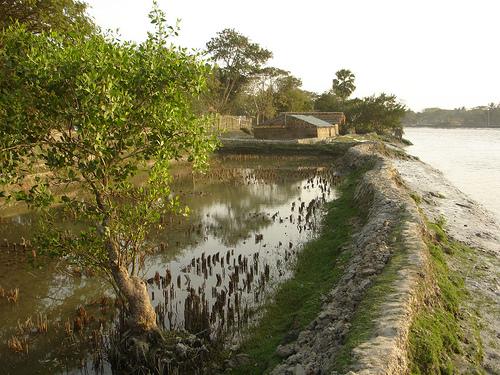
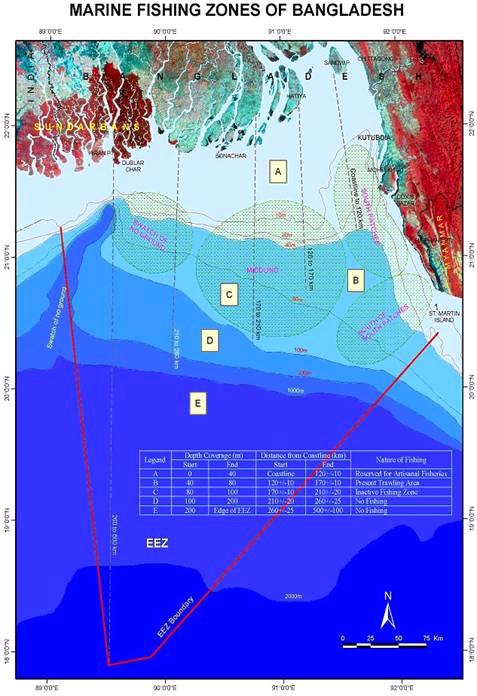
Marine & Coastal Environment of Bangladesh
·
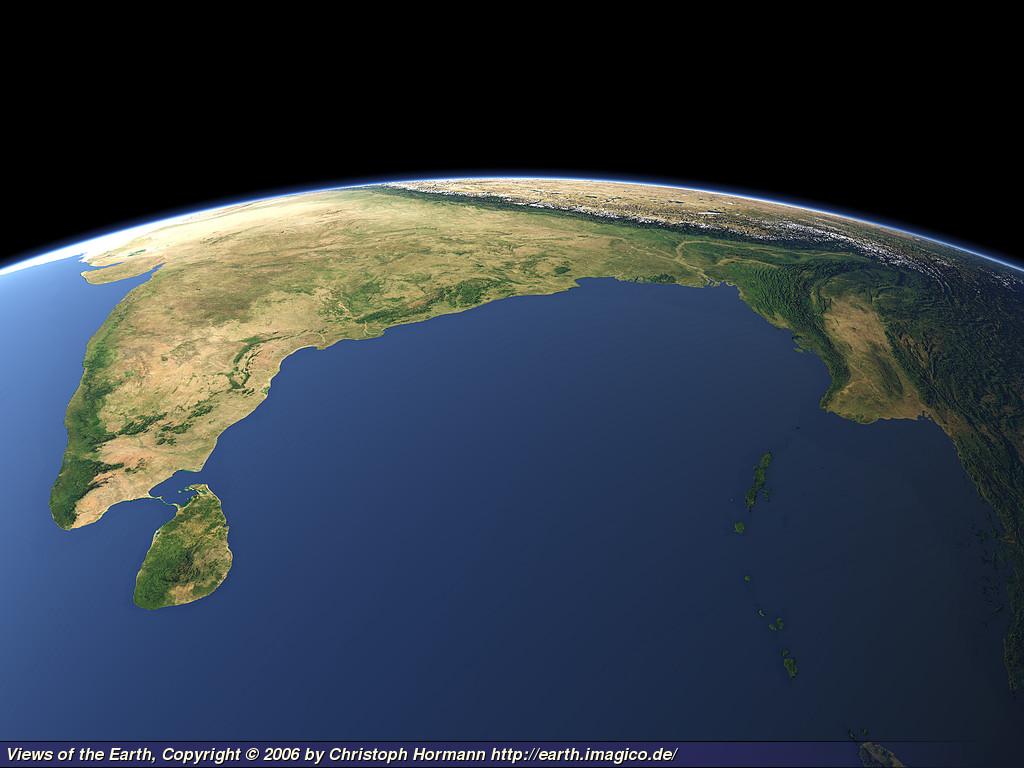
The Bay of Bengal of Bangladesh is a semi-
enclosed tropical basin
·
Bangladesh shelf area covers 66,000 km2 &
coastal waters are very shallow (< 10 m
depth) covering about 24,000 km2, and (up
to 200 m depth) covers about 70,000 km2
·
Marine fisheries contributes 19.4% of total
fish production (2.56 million tons) of
Bangladesh
·
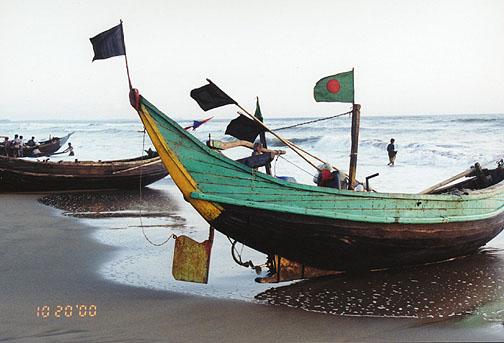
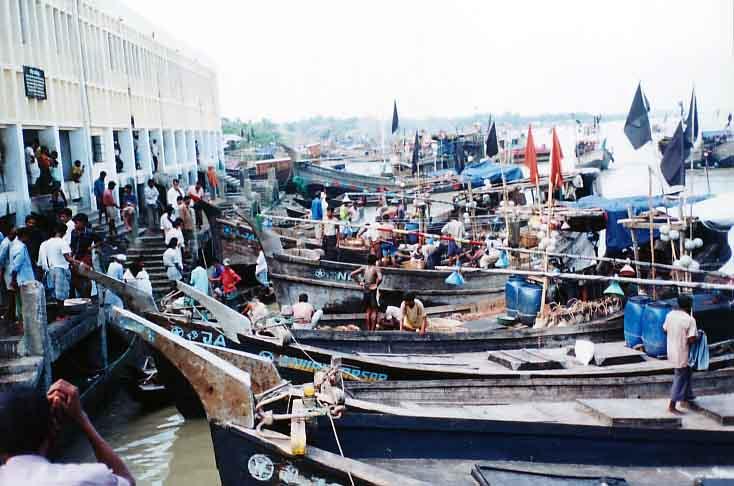
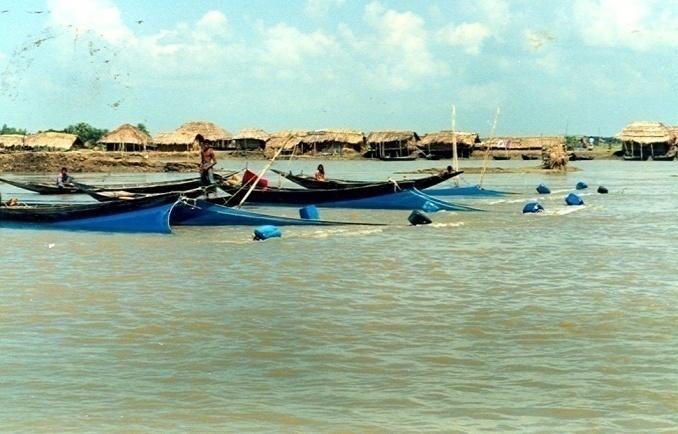
Marine fisheries divided into industrial and
artisanal fisheries
·
Industrial fishery based on trawl fishery
(shrimp & fish) contributes only 6.6% and
artisanal fisheries contributes 93.4% of the
total marine landings
·
Declining CPUE (650 kg/ day/ boat in 2001-
2002 to under 100 kg/ day/ boat in 2005-
2006) targeting hilsa, skipjack tuna and
mackerel is in alarming situation
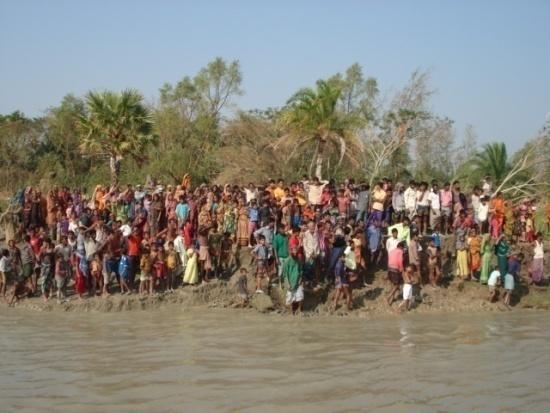
Management and development issues
· Old fashioned fisheries management,
regulation and rules, ie. Marine
Fisheries Ordinance 1983, which needs
to be updated
· Low level of monitoring, control and
surveillance (MCS) of DoF
· Inadequate management of Fisheries
& Ecosystem needs to be updated as
per the requirement of NFP (1998) &
MF-Sub Sec-Strategy Policy 2006
· Resource allocation and access rights
to poor fishermen
· Co-management of small-scale
fisheries ie. CBFM (Dof/WFC) & ECFC
(FAO) Projects
· Inadequate research on Marine
Fisheries, ie. FRSS-DoF needs
upgrading

Legal instruments, policies, strategies, and plans, related to
fisheries, environment, and coastal & marine resources
Following Acts, Rules made by various Ministries of Govt. of Bangladesh
over the decades supporting coastal & marine fisheries resources:
· The Marine Fisheries Ordinance, 1983
· The Marine Fisheries Rules, 1983
· The Environmental Conservation Act,
1995
· The Territorial Waters & Maritime Zones
Act, 1974 Territorial Waters and Maritime
Zones Rules, 1977
· Bangladesh Merchant Shipping Ordinance,
1983
· Bangladesh Code of Conduct for
Responsible Fishing drafted (in the line
with FAO's CCRF) for immediate
implementation
· Bangladesh Coastal Zone Policy, 2005 by
Min. of Water Resources
Key management measures related to fisheries
in BoB
·
Limiting the fishing days for industrial trawlers: The freezer trawlers are
permitted for 30 days, non-freezer trawlers are permitted for up to 15 days
·
Measure to limit discard of bi-catch: Shrimp trawlers must have at least 30
percent fish in the total catch
·
Control of mesh size: Mandatory 45 mm mesh size at the cod end for the
shrimp trawl nets. Since 2003, massive drive against catching of jatka (hilsa fry)
by small mesh nets called "Current Jaal" during November to May
·
Depth zone restriction of 40 m: Restricting shrimp and fish trawling within the
40 m depth zone
·
Declaration of hilsa sanctuary: Four sites in the coastal area have been
established as hilsa sanctuaries
·
Restrictions on industrial trawler license: Restricted the issue of license for
industrial trawler till conducted proper survey of the EEZ
·
Encouragement to fish beyond 500 m isobaths of EEZ: Encourage industrial
fishing fleet to fish outside 500 m isobaths within EEZ
·
Restriction on post larvae collection: Restricted PL collection in coastal areas
in 2000, which was later reinforced in 2002
·
Ban on throwing any fish into the sea: Imposed restriction on throwing any
catch except turtle in the sea
·
Declaration of marine reserve: Declared Middle Ground & South Patches as
marine reserve
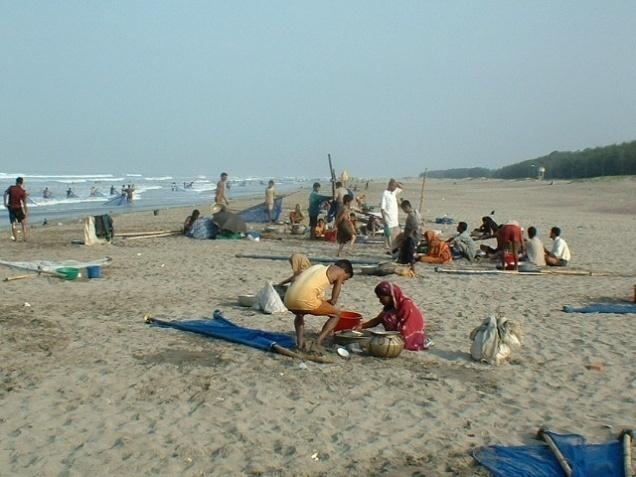

Fisheries management, resource conservation
& critical habitat protection
· Fisheries management in the
Sundarbans- the most important
nursery area for the Bay of Bengal
(Sundarbans Biodiversity Project of
MoEF)
· Protection of coastal breeding & nursery
areas
· Integrated Coastal Resource
Management by Integrated Coastal Zone
Management (ICZM)
· Project conservation of marine
biological resources
· Protection of IUU fishing in BD waters
Protected areas in the coastal zone of Bangladesh
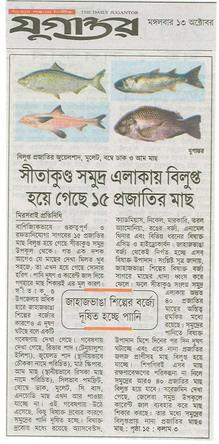
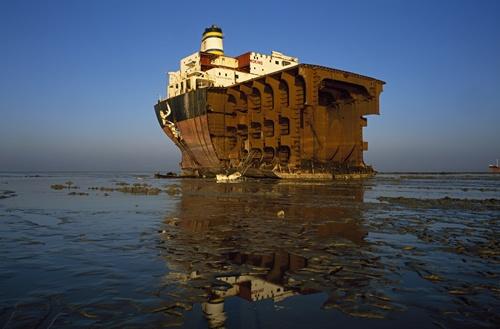
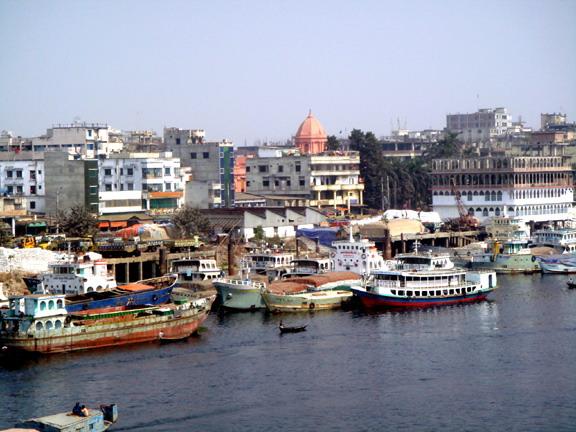
Land-based pollution affecting the Bay of
Bengal area
· Pollutants discharged from ship breaking and
their impacts
· Other sources of pollutants ie. Surface run
off & colossal discharge of pollutants from
many sources
Major national/donor assisted projects in the
BOBLME area that are relevant to the BOBLME
Project
· In recent years a very survey has been conducted in Bangladesh
waters
· "Bangladesh Marine Fisheries Capacity Building Project" under
financial assistance from OIC (US$ 17.07 million; ie.Tk. 1194.60
million) is on-going to be implemented by the DoF. The major
objectives of the project is:
Assess the standing stock & MSY of estuarine & coastal fisheries for
management of the artisanal fisheries
Develop a catch assessment program for routine maintaining of the
coastal & marine fisheries as to changes due to the dynamics of fishing
Develop mechanism to implement Monitoring, Control & Surveillance
(MCS) system to oversee & manage the resources.
· Main task is to collect a modern equipped survey (research) vessel
and survey equipments to assess the standing stock & MSY and to
develop an integrated database. The purchase of a survey vessel is
under way.
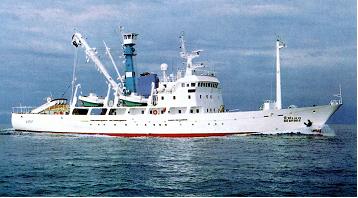
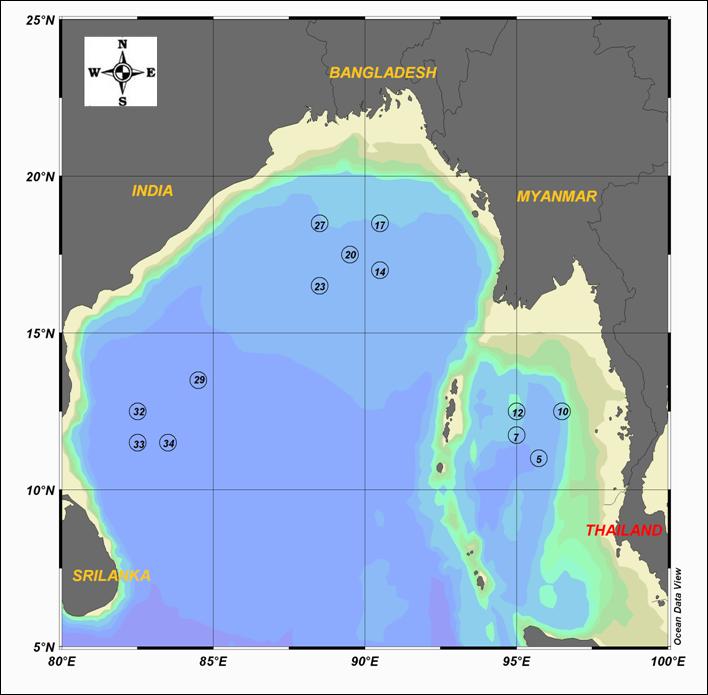
BIMSTEC Deep-sea Resource Survey
(2007)
· Survey period- 25 October-21 December 2007
· Scientists- 16 Thai and 10 (2 from each of the 5 foreign
countries including 2 Bangladeshi Scientists)
· Objective- ecosystem based management of the deep
sea large pelagic resources
Area `A'-closest to BD
got highest YFT
A
C
B
MV SEAFDEC
Institutions involved in activities relevant to
BOBLME Project
Ministry of Fisheries and Livestock
·
Department of Fisheries (DOF)- extension activities, implementation of fish
conservation laws & regulations, and development & management of
fisheries resources. 'Marine Fishery Resource Survey Unit (MFRSU)',
·
Bangladesh Fisheries Research Institute (BFRI)- Marine Fisheries & Technology
Station' of BFRI in Cox's Bazar
·
Bangladesh Fisheries Development Corporation (BFDC)- promoting fishing
industry, landing, preservation & processing facilities
· Marine Fisheries Academy- Fishing Trawler Cadet Training Institute
Academic institutions
·
Institute of Marine & Fisheries Science, Chittagong University
·
Fish. & Marine Resources Technol. Discipline, Khulna University
·
Bangladesh Agricultural University
Govt. ministries and agencies like environment, shipping, water resource,
commerce, communication, tourism are involved in activities relating to
marine resources
Defense and security agencies like Bangladesh Navy and Coast Guard are actively
involved in protection of marine resources
Development on implementing the BOBLME
Project in Bangladesh
· MoFL is in process to activate the NTForce which was
formed during the inception phase of BOBLME project
(2003)
· National Coordinator also is in process to select a National
Technical Advisor
· As NTF and NTA are made available, the other bodies
(advisory panel, consultant) will be set as per demand.
· Under co-financing arrangement a TA project "Support to
Sustainable Development of the BOBLME" funded by GoB is
now operational (GOB contribution of US$ 712,000).
Thank you all
Table 1. Statement of water resources in Bangladesh
Water resources
Area (hectare)
Inland fisheries
a.
Open water bodies
2, 83 ,2792
Floodplains
1, 011, 563
River & tributaries
114, 161
Natural depressions
68, 000
Total open water bodies
4, 047, 316
a.
Closed water bodies
Ponds
146,890
Oxbow lakes
5,488
Shrimp farms
140, 000
Total closed water bodies
292,378
Total inland water bodies (a+b)
4,339,694
Marine fisheries
16,606,600
TABLE 2. TOP TEN COUNTRIES IN INLAND CAPTURE FISHERIES PRODUCTION (FAO 2009)
Country
Production (Thousand
Percentage of world
tonnes)
production
China
2,544
25.3
Bangladesh
957
9.5
India
858
8.5
Myanmar
631
6.3
Cambodia.
422
4.2
Uganda
367
3.6
Indonesia
301
3.0
Tanzania
293
2.9
Egypt
256
2.5
Brazil
251
2.5
TABLE 3. TOP TEN COUNTRIES IN AQUACULTURE PRODUCTION (FAO 2009)
Producer
2004
2006
APR
(Tonnes)
(Percentage)
Top ten producers in terms of quantity, 2006
China
30 614 968
34 429 122
6.05
India
2 472 335
3 123 135
5.71
Viet Nam
1 198 617
1 657 727
17.6
Thailand
1 172 866
1 385 801
4.84
Indonesia
1 045 051
1 292 899
11.23
Bangladesh
914 752
892 049
1.25
Chile
776 421
802 410
9.81
Japan
776 421
733 891
-2.78
Norway
636 802
708 780
5.50
Philippines
512 220
623 369
10.32
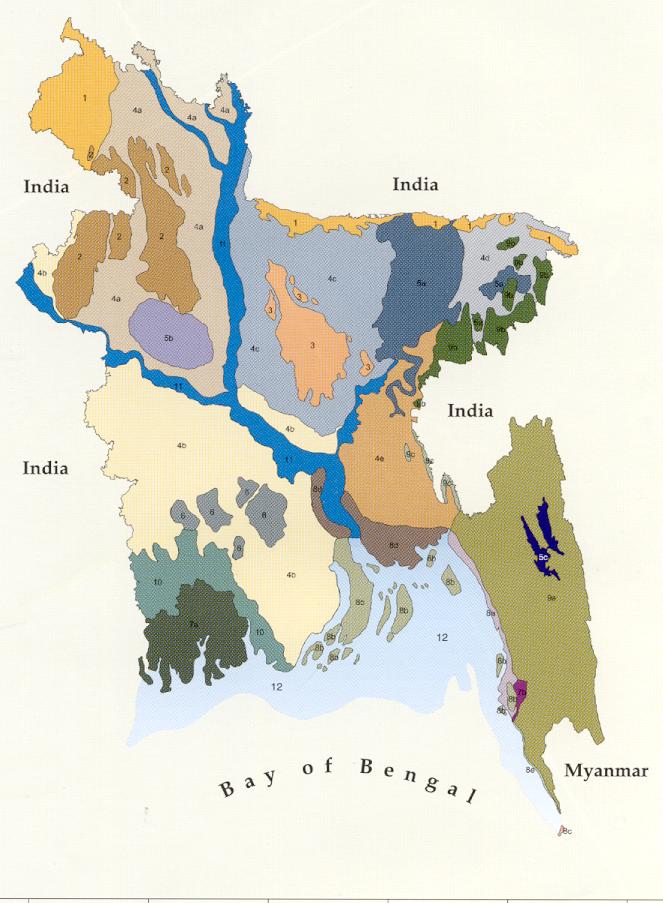
Bay of Bengal
Major River Systems in Bangladesh
Brahmaputra
Ganges
Megna
National data collection strategies and/or
activities
· Department of Fisheries- FRSS
· Local fishermen & communities
· Private sector exporters & traders
· NGOs
· Ministry of the Environment
· Ministry of Water Resources/BWDB
· Ministry of Commerce